


When your car is totaled, the insurance company’s payout is based on a number you’ve probably never thought about: its Actual Cash Value (ACV). An actual cash value calculator auto is a tool that gives you a solid estimate of your car’s market worth right before an accident happened, empowering you to challenge a low settlement offer.
This number is critical because it’s what your insurance company owes you, and it’s almost always less than what you originally paid for the car. Understanding this value is the first step toward a fair claim.
What Actual Cash Value Means for Your Insurance Payout
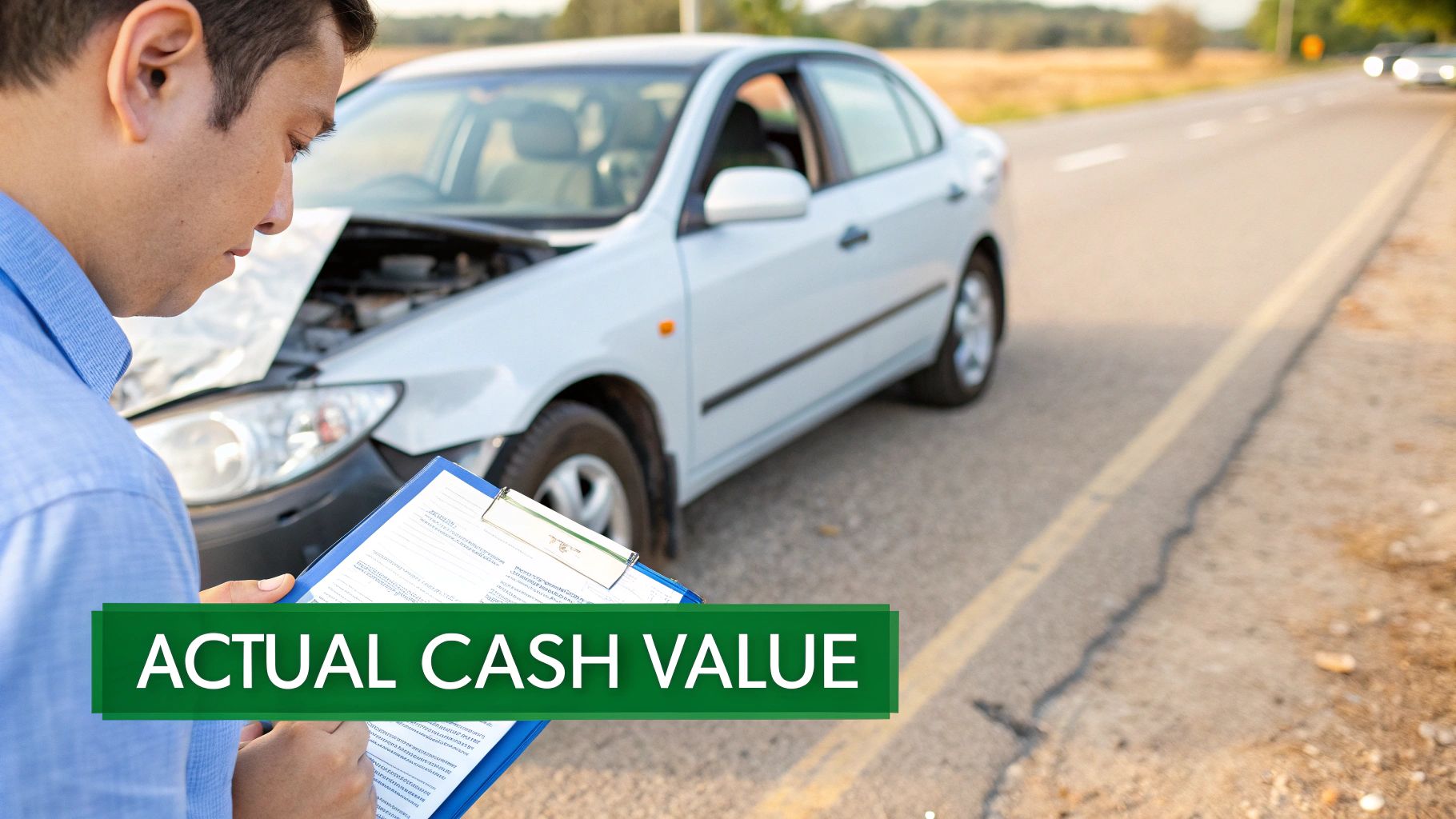
Here’s the hard truth: when your vehicle is declared a total loss, the insurance company isn’t on the hook to buy you a brand-new one. Their settlement offer is based on the car’s Actual Cash Value—what it was worth on the open market moments before the crash. This is the core concept of every total loss claim.
Think of ACV as the replacement cost of your exact vehicle, minus all the depreciation it’s seen from age and use.
For example, if a similar car would cost $20,000 to buy today, but yours has racked up $2,800 in depreciation from wear and tear, its ACV would be $17,200. That’s the number that drives your final payout.
You can dig deeper into how insurers calculate this value over at MoneyGeek.com, a reputable consumer resource.
The Key Factors in ACV Calculation
So, how does an adjuster land on that final number? It’s not random. Insurers look at a specific set of data points to figure out your car’s pre-accident worth. This is exactly why two cars that look identical on paper can have completely different values.
Here’s a quick breakdown of the primary inputs that move the needle on your car’s ACV.
Key Factors That Determine Your Car’s ACV
| Factor | How It Impacts ACV | Example |
|---|---|---|
| Age and Mileage | The biggest driver of depreciation. Older cars with more miles are worth less. | A 2020 Toyota Camry with 30,000 miles will have a higher ACV than one with 80,000 miles. |
| Overall Condition | Adjusters grade the car’s pre-accident state. Scratches, rust, and worn interiors lower the value. | A “pristine” vehicle gets a higher valuation than one graded “fair” due to visible wear. |
| Trim and Options | Premium features add value. A fully loaded model is worth more than a base model. | Leather seats, a sunroof, and an advanced tech package increase the ACV. |
| Local Market Data | ACV is based on what similar cars are selling for in your specific area. | The same car might have a higher ACV in California than in a small Midwestern town. |
These variables are combined to create a comprehensive picture of your vehicle’s fair market value right before the loss occurred.
A Real-World Scenario
Let’s make this tangible. Imagine you and your neighbor both own a 2021 Honda CR-V EX-L.
You’ve been meticulous with maintenance, kept the mileage low at 25,000, and just put on a new set of tires. Your neighbor’s CR-V, on the other hand, has 55,000 miles, a few noticeable scratches, and is due for its next major service.
If both cars were totaled in separate incidents tomorrow, your ACV payout would be significantly higher. Why? Because your vehicle’s superior pre-accident condition and lower mileage made it more valuable. This is exactly why blindly accepting the insurer’s first offer can be a costly mistake.
Decoding the Insurer’s Valuation Method

Ever wondered how an insurance adjuster can spit out a settlement offer almost immediately after declaring your car a total loss? They’re not magic. They’re using proprietary software systems like CCC ONE or Mitchell, which are built to standardize the valuation process—and often, to keep the insurance total loss payout as low as possible.
These platforms are designed for speed, not necessarily accuracy. They instantly crunch your car’s basic info—make, model, year, mileage—and apply depreciation based on massive data sets and broad market averages. The problem? This approach almost always misses the details that made your car special, like that premium sound system, the pristine leather interior, or the brand-new tires you just put on.
How They Use “Comparable” Vehicles
To back up their number, the adjuster will hand you a report listing “comparable” vehicles, or “comps,” that have recently sold nearby. But here’s the catch: these comps are rarely an apples-to-apples comparison. It’s a well-known tactic for insurers to cherry-pick examples that support their lowball offer.
You’ll often see them:
- Pitting your garage-kept gem against a similar car sold at a wholesale auction.
- Using comps with higher mileage, fewer options, or a less desirable color.
- Ignoring recent spikes in used car prices that should have boosted your vehicle’s value.
Depreciation is the biggest hammer in their toolbox. A new car can plummet in value by 20%-30% in the first year alone, a statistic their software leans on heavily. If you want to dive deeper into the nuts and bolts, there are great resources explaining how insurance companies calculate settlements.
Why Their Offer Is Just a Starting Point
Here’s the most important thing to remember: the insurer’s initial offer is generated by a formula that serves their bottom line. It’s not the final word on what your vehicle was worth; it’s a starting point for negotiation.
This automated, one-size-fits-all process is exactly why an independent actual cash value calculator auto is so crucial. It arms you with a second opinion grounded in your car’s actual condition and features.
An insurer’s valuation is based on their data and their system. An independent appraisal is based on the reality of your vehicle and its place in the current market.
This is where a professional steps in. Understanding the different types of auto insurance appraisals gives you the leverage you need to effectively push back against an offer that just doesn’t feel right.
Finding Your Car’s True Value Independently
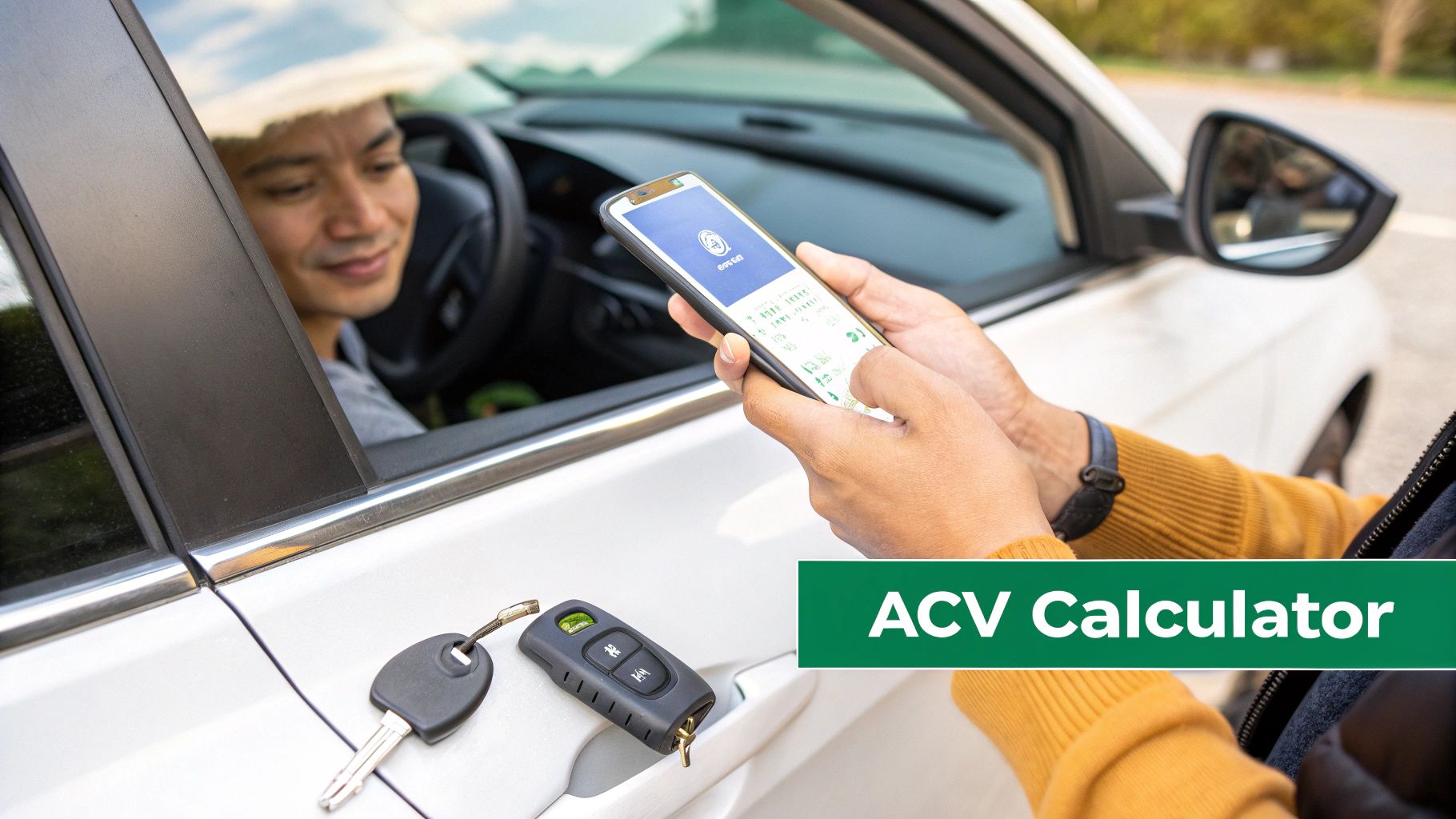
It’s time to take control of your claim. Instead of just waiting to see what the insurance company offers, you can generate your own data-backed valuation. Using an independent actual cash value calculator auto arms you with real numbers so you can negotiate from a position of strength.
The process is surprisingly straightforward. Before you dive in, though, you’ll want to gather a few key details about your car to make sure the estimate is as accurate as possible.
What You’ll Need for an Accurate Estimate
To get a precise valuation, the calculator needs the right inputs. These aren’t just about the make and model; they’re the details that made your specific car unique.
Try to have this information handy:
- Vehicle Identification Number (VIN): This is your car’s unique fingerprint, usually found on a small plate on the driver’s side dashboard or on the door jamb.
- Exact Mileage: You’ll want the mileage from right before the accident.
- Trim Level & Options Package: Was your car the base model, or did it have the premium package with the sunroof, leather seats, and upgraded sound system? These details add value.
- Recent Upgrades & Maintenance: Did you just shell out for new tires or complete a major service? Dig up those records.
- Pre-Accident Photos: If you have them, photos are powerful proof of your car’s great condition before the crash.
With this information ready, you’re set to find out what your car was really worth. It’s the most common question drivers have—how much is my car worth right before an accident—and a good calculator can give you a clear answer.
Using the Calculator Step by Step
Putting your data into the tool is the final piece of the puzzle. Most online calculators walk you through it, but pay close attention to the details. Be completely honest about your car’s pre-accident condition—was it truly “excellent” or more like “good”? Every little detail matters.
For people who want to dig even deeper, exploring professional automotive valuation services can provide an appraisal report that often carries serious weight in negotiations.
Key Takeaway: The goal here isn’t to inflate your car’s value. It’s to calculate its true market worth. An accurate, independent valuation is your single best tool for getting a fair insurance payout after a total loss.
Negotiating a Fair Payout with Your Evidence
Okay, you’ve done your homework and used an actual cash value calculator auto to get an independent valuation. Now what? You’re no longer just a passive recipient of the insurer’s offer. You’re in the driver’s seat, ready to negotiate.
The next step is to put together a clear, professional counter-offer for the insurance adjuster. This isn’t about picking a fight; it’s about calmly presenting the facts and showing them why your vehicle is worth more than their initial number.
I always recommend starting with a brief email or letter. Politely acknowledge their offer, state that your research suggests a higher value, and then attach your evidence. Never just send a number—send the proof that backs it up.
Building Your Counter-Offer Package
To make your case truly compelling, you need more than a single report. A strong counter-offer is a collection of documents that, when viewed together, paint a complete and undeniable picture of your vehicle’s true worth before the accident.
Think of it as your evidence package. Here’s what it should include:
- Your Independent Valuation Report: This is the cornerstone of your argument. It’s a data-driven value that directly challenges the insurer’s figure.
- Maintenance and Repair Records: Did you just buy new tires? Get a major service done? Receipts for significant work prove your car was well-maintained, which adds real value.
- Photos of Your Vehicle (Pre-Accident): If you have pictures showing your car was clean, rust-free, and in great shape before the crash, include them. Visuals are powerful.
- Local Comparable Listings: This is a big one. Find 2-3 online listings for the exact same make, model, year, and trim for sale in your immediate area. This provides real-world, local market proof of what it would cost to replace your car.
The reality is that disagreements over actual cash value are common. Insurers often rely on automated software that can easily miss key details, like recent upgrades or the pristine condition of your vehicle. These oversights can cost you hundreds, if not thousands, of dollars.
As you can learn more about on Total Loss NW, presenting solid evidence like local sales data is a standard, respected way for owners to justify a higher settlement.
By providing this organized evidence, you shift the entire conversation from a battle of opinions to a discussion based on facts. You’re not just saying your car was worth more; you’re showing the adjuster exactly why.
Strengthening Your Claim with a Certified Appraisal
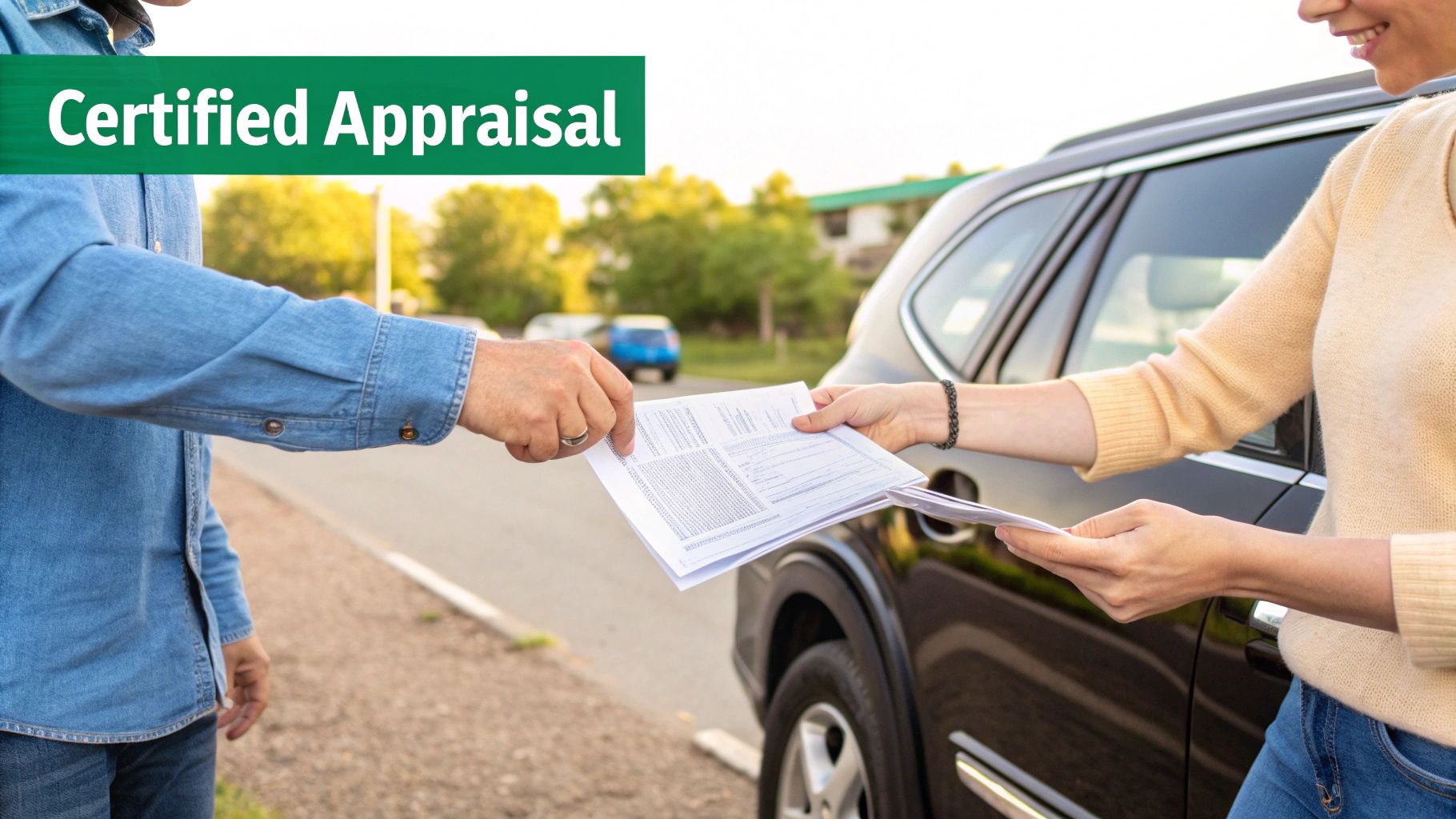
So, what happens when the insurance adjuster just won’t budge on a lowball settlement? It’s time to bring out the heavy artillery. While an online actual cash value calculator auto gives you a great starting point, a certified appraisal report is your single most powerful tool for a formal dispute.
This isn’t just about disagreeing with their number anymore. A professional appraisal transforms your argument from an opinion into a data-driven, defensible case. It’s the hard evidence you need to prove your vehicle’s true pre-accident worth and show the insurer you’re serious about getting the compensation you deserve.
Unlike a free online estimate, a certified report from SnapClaim is a comprehensive, court-ready document built to challenge an insurer’s offer head-on.
A Risk-Free Way to Prove Your Case
We get it—challenging an insurance company can feel like a David vs. Goliath situation. That’s why SnapClaim offers a risk-free path forward. Understanding the cost of a professional car appraisal helps you see the value it adds, especially when it’s backed by our guarantee.
SnapClaim’s Money-Back Guarantee: If your insurance recovery from the claim is less than $1,000, SnapClaim refunds the full appraisal fee—guaranteed.
This guarantee completely removes the financial risk from getting the expert documentation you need. It gives you the confidence and leverage to hold your ground, ensuring you have professional-grade support to secure a fair insurance total loss payout with zero downside.
Get your free estimate today or order a certified appraisal report to strengthen your insurance claim.
Frequently Asked Questions (FAQ)
Can I dispute the insurance company’s ACV offer?
Yes, you absolutely can. The insurer’s first number is just an offer, not the final word. You have the right to negotiate if you believe the car’s value after the accident is too low. To make a strong case, you need evidence. Start with an independent report from an actual cash value calculator for your car, gather maintenance records, and find local listings for similar cars. For maximum leverage, a certified appraisal from a service like SnapClaim provides the defensible proof needed to negotiate fairly.
What is the difference between ACV and replacement cost?
Actual Cash Value (ACV) is your car’s market worth right before the accident, including deductions for age, mileage, and wear (depreciation). Replacement Cost Value (RCV) is the cost to buy a brand-new vehicle of the same make and model. Standard auto policies almost always cover ACV, which is why it’s so important to prove your car’s true pre-accident value.
What is a diminished value claim?
A diminished value claim is separate from a total loss. It’s the loss in a vehicle’s resale value after it has been repaired following an accident. Even with perfect repairs, a car with an accident history is worth less than one without. A diminished value claim helps you recover that financial loss.
Does my auto loan affect the ACV payout?
No, it doesn’t. This is a common and costly misunderstanding. Your loan balance has zero impact on your car’s ACV. The Actual Cash Value is determined only by the vehicle’s fair market worth at the moment of the loss. If you happen to owe more on your loan than the ACV payout you receive, you’re on the hook for paying that difference out of pocket. This is why “gap insurance” exists—to cover the “gap” between your loan balance and the insurance check.
About SnapClaim
SnapClaim is a premier provider of expert diminished value and total loss appraisals. Our mission is to equip vehicle owners with clear, data-driven evidence to recover the full financial loss after an accident. Using advanced market analysis and industry expertise, we deliver accurate, defensible reports that help you negotiate confidently with insurance companies.
With a strong commitment to transparency and customer success, SnapClaim streamlines the claim process so you receive the compensation you rightfully deserve. Thousands of reports have been delivered to vehicle owners and law firms nationwide, with an average of $6,000+ in additional recovery per claim.
Why Trust This Guide
This guide was reviewed and verified by SnapClaim’s auto appraisers, who specialize in diminished value and total loss disputes.
Our team continually updates every article to reflect current insurer guidelines, valuation standards, and court-accepted appraisal practices, ensuring that you’re relying on information trusted by professionals nationwide.
Get Started Today
Whether you’re challenging a low total loss settlement or proving your vehicle’s post-repair loss in value, SnapClaim makes it simple to take the next step.
Generate a free diminished value or total loss estimate in minutes and see how much compensation you may be owed.
👉 Get your free estimate of your total vehicle value today